Should I put my aerator into hibernation over the cold months?
Here we talk to Billy Hancock, the owner of H2O Plants, one of Reesink Hydro-Scapes’ UK Otterbine suppliers, to understand more about winter pond aeration and maintenance and provide some practical advice and tips for aerator winter storage from Otterbine, our lake and pond aeration manufacturer.

Billy Hancock
Owner, H2O PlantsMany pond and lake owners’ first introduction to aeration will be during the summer months when their demand for an installation or purchase will be for reasons such as:
- Depleted/low oxygen levels
- Dying or distressed fish
- Poor water quality
- Excessive algae growth
Then, when the winter comes along, they switch it off, winterise it and don’t think about it until the following spring. While lake aerators are designed to increase circulation and to oxygenate the lake water during the warmer seasons, they can also be used during winter to maintain circulation.
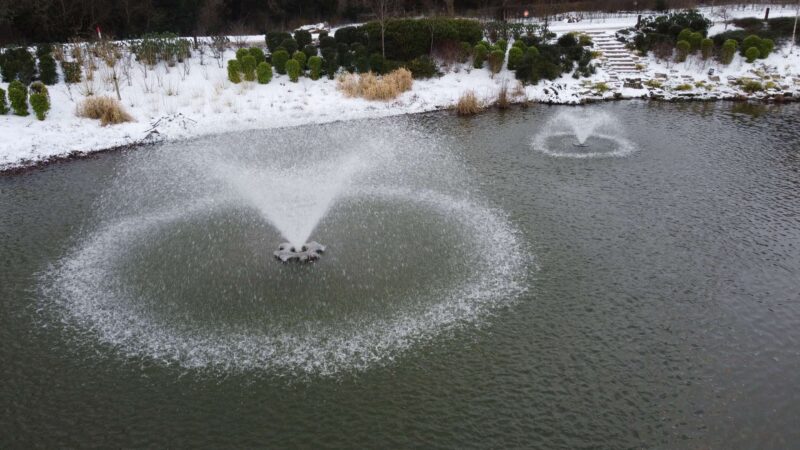
Here are the reasons why running your aeration during the winter months is just as beneficial as it is during the summer:
- By running your system during the winter months, you are introducing vital oxygen to the water which is always a benefit as everything in your pond, lake or fishery requires oxygen – its demands don’t stop because it gets cold.
- When a pond, lake, or fishery freezes over, it cuts off the primary source of re-oxygenation — the interaction between the surface water and the air, driven by wind movement.
- If the surface freezes and snow covers your pond, lake, or fishery, it will block sunlight from reaching aquatic plants. Without sunlight, these plants cannot perform photosynthesis, the process through which they produce oxygen.
- If the surface of the pond, lake or fishery is frozen this stops the water’s ability to release toxic gasses and if these gases are allowed to build up under ice then the gases can poison the fish and cause fish deaths.
- Helping to prevent your pond, lake or fishery from freezing you are removing a potential hazard. A sheet of ice that looks thick enough to stand or skate on is beyond tempting and can led to injury for members of the public and wildlife.
- Another benefit of the pond/lakes’ water being moved around by the aeration process is that it helps to break down the layers of water known as Thermal Stratification and by doing this you will be making the water temperature equal in all areas of the water body. This in turn means that should your lake be a fishery the fish will not be huddled together in one spot where the water is warmer, they will be moving around which means they have to feed which means increased catch rates for the colder months.
- Increased oxygen levels mean increased fish activity, increased fish activity means increased catch rates, increased catch rates mean happy anglers and that’s what fishing is about!

Best practise winter maintenance tips for your Otterbine aerator
If the water temperature doesn’t drop and remain below 30 degrees Fahrenheit, the unit can remain in the water. Oil-cooled motors can stay in the water year-round, however diffused air systems should only be kept in so long as there are no moving parts in the water.
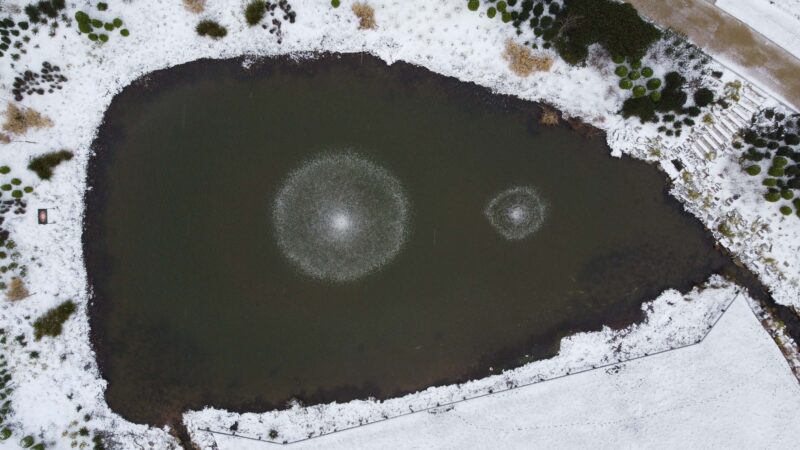
For those who have oil-cooled units and wish to leave their aerator in the water during the colder months it’s important to keep the area free of ice, running the unit 24 hours a day, every day to prevent ice accumulation and damage. If the power is shut down and the unit freezes in, it must not be run until the ice clears, otherwise, severe motor damage may occur. If you don’t plan on running the aerator continually you may wish to remove it from the waterway.
Removal of a surface aeration system is simple and is based on whether the unit is anchored to the bottom or moored to the pond’s shoreline. If it’s anchored, disconnect the anchoring lines from the unit and flip it upside down. At this point, either hoist it into a boat or tow it to shoreline. If the system is moored, remove the mooring line on one side of the pond then carefully tow the unit to shore.
Anchoring the cable and mooring lines to a buoy is recommended for easy retrieval when it comes time to re-install. In both cases, once you have the unit on shore remove the power cable (if the power cable has a quick disconnect remove it from the unit and place a protector cap on the end) and store it. For oil-cooled motors, simply store the unit indoors.
Use this opportunity to ensure the unit is in prime condition when it is re-installed: check the float and spin the propeller to make sure the bearings are free. If the unit incorporates oil into its motor components, this is the ideal time for an oil change. As a reminder, to uphold some warranties and for optimal functioning, Otterbine recommends an oil change after the second but before the third running season.
If you’d like to talk to someone about adding an Otterbine aeration system to your pond, lake or fishery why not give H2O Plants a call today on 07958 304744 or fill out the form and Reesink Hydro-Scapes will be in touch.
