
INSIDE TURFRAD
Following on from our first article looking at the story behind turfRad which considers how satellite science became a turf innovation, we move on here to consider how turfRad works and the cutting-edge technology it features.
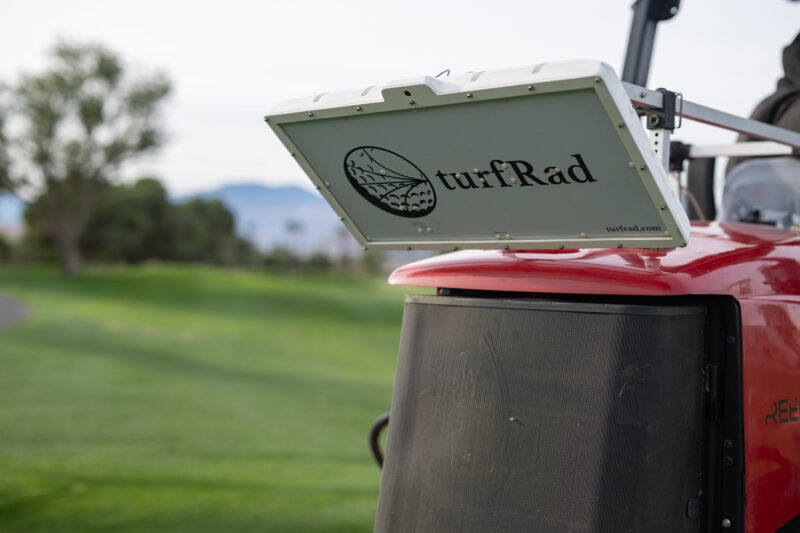
The technology changing how turf moisture is measured
Understanding soil moisture is essential for maintaining high-quality turf. But until recently, measuring it accurately across an entire golf course has been extremely difficult – that’s the challenge turfRad solved.
At the heart of the system is a technology originally developed for satellite remote sensing.
“Our sensor measures microwaves that are naturally emitted from the soil,” explains Derek Houtz, CEO and co-founder of TerraRad. “It’s not a radar that is transmitting or shooting anything.”
Instead, turfRad works by detecting the microwave energy naturally released from the ground. Water affects how much microwave energy soil emits. By measuring that energy, turfRad can determine how much moisture is present beneath the surface.
“The amount of moisture in the top ten centimetres changes the microwave power emitted from the soil,” says Derek.
Looking beneath the turf
Many turf monitoring technologies measure what’s happening on the surface.
Tools such as NDVI imaging or thermal sensors detect plant stress or temperature changes, but those methods only capture the symptoms of moisture problems – microwave sensing is different.
“Other technologies measure the leaf status – stress, colour or temperature – whereas microwaves can actually measure root-zone moisture,” Derek explains.
This ability to see beneath the turf is what sets turfRad apart.
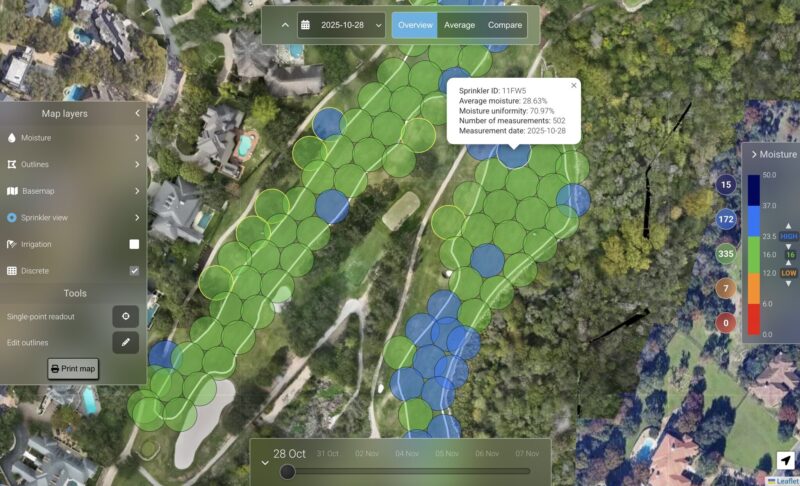
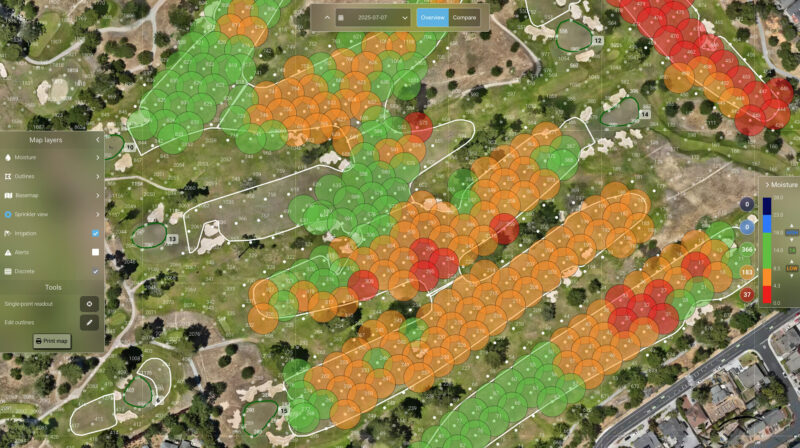
Mounted on a mower or utility vehicle, the sensor scans the ground as it moves across the course, creating high-resolution maps of soil moisture and instead of isolated readings, golf course managers can see moisture conditions across entire greens, fairways or other turf areas.
Turning data into decisions
However, the hardware is only part of the story. “The sensor was the initial innovation,” says Derek. “But the software is equally important to turn that data into something actionable.”
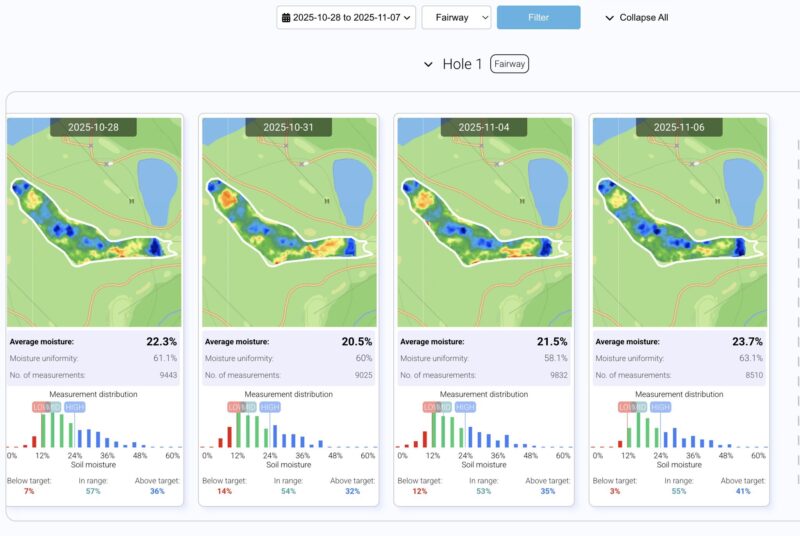
Each scan produces detailed moisture maps through the turfRad portal, where users can analyse conditions and identify areas requiring attention.
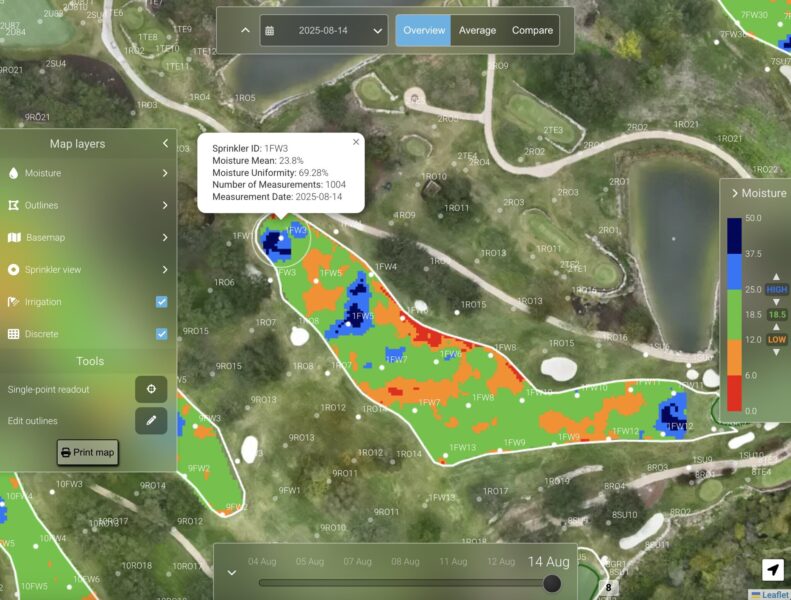
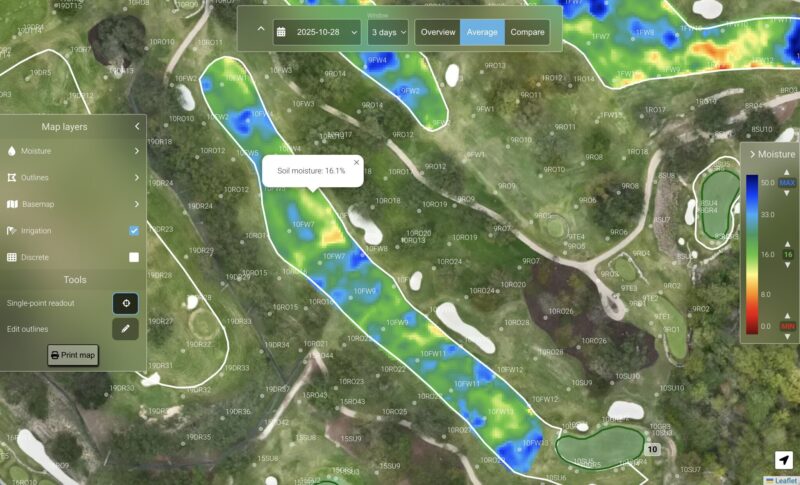
The platform allows turf managers to:
- Identify wet and dry spots quickly
- Monitor irrigation uniformity
- Track moisture changes over time
- Print maps for hand-watering crews
- Integrate moisture data with irrigation system
- Visually see moisture levels by sprinkler zones
The result is a system designed not just to measure conditions but to guide daily management decisions.
From prototype to production
Developing the product required extensive testing and feedback. TerraRad initially limited its rollout to just eight early customers and the core sensing technology proved reliable from the start.
“The data was always good,” he says. “The early issues were things like uploads, the app, automatic operation and hardware details.”
Since those early trials, the system has evolved through multiple hardware revisions and continuous software updates.
“We’ve built over 600 sensors across four hardware revisions and deployed new software features on a monthly basis for three years,” says Derek.
The result is a technology originally designed for space research now delivering precise insights on the ground – one metre at a time.
But why does complete area moisture management matter? Find out in our final article!

